Discovering a medieval masterpiece
To celebrate the Bayeux Tapestry’s historic visit to the UK, our Thirds took part in a special half-day event exploring one of the world’s most remarkable historical artefacts. Through expert insights, practical activities and cross-curricular collaboration, pupils discovered how this extraordinary embroidered narrative can help us understand the past, while developing their own skills as historians and art historians.
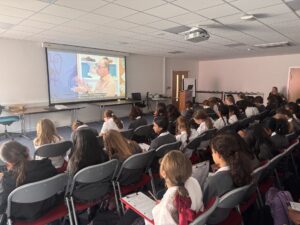
The morning began with a live stream from the British Museum, where pupils heard from leading experts and explored the story, significance and craftsmanship of the Bayeux Tapestry. Depicting events surrounding the Norman Conquest of England in 1066, the tapestry offers a fascinating insight into medieval society, political power and the ways historical events have been recorded and interpreted.
Our History of Art teachers then introduced pupils to the skills of an art historian, encouraging them to look closely at the tapestry as both a work of art and a historical source. Through examining its composition, symbolism and visual storytelling, pupils considered how images can communicate information, shape our understanding of events and reveal the perspectives of those who created them.
This approach encouraged the girls to look beyond the story depicted in the tapestry and ask important questions about how and why historical sources were produced, what they can tell us, and what they might leave out.
Exploring the Norman Conquest
Throughout the event, pupils took part in a range of engaging activities designed to deepen their understanding of the Norman Conquest and medieval England. By combining historical enquiry with close visual analysis, they explored how artefacts can provide evidence about the past and why interpreting that evidence requires curiosity, careful observation and critical thinking.
The event also highlighted the value of approaching history through different academic disciplines. Studying the tapestry as a visual artwork, a historical document and a carefully constructed narrative enabled pupils to appreciate its complexity and continuing significance.
A modern masterpiece: A Day in the Life of a Third
Inspired by the Bayeux Tapestry itself, pupils worked collaboratively to create their own modern interpretation, titled A Day in the Life of a Third (Year 7). Drawing on the original tapestry’s distinctive narrative style, they captured scenes from everyday life at LEH in a creative project that brought their learning into the present.
Our Classics Department supported the project by providing Latin statements, helping pupils incorporate another layer of historical and linguistic interest into their work. The result was a wonderful opportunity to combine creativity, historical understanding and classical language, while reflecting on how a familiar school day might be represented for future generations.
The project demonstrated the value of collaboration across several HALE subjects, bringing together History, History of Art and Classics in a shared exploration of storytelling, culture and the past.
The Bayeux Tapestry event was an inspiring reminder that history is not simply about learning dates and events. It is also about asking questions, interpreting evidence and finding creative ways to communicate what we discover. Through this memorable experience, our Thirds developed their analytical skills, strengthened their historical understanding and created a tapestry-inspired record of life at LEH today.