Students Develop Critical Thinking, Public Speaking and Political Awareness in Thought-Provoking House Debate
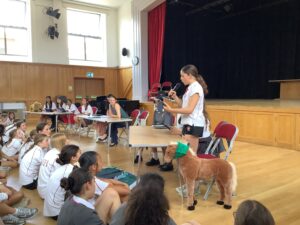
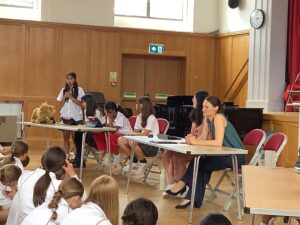
On Wednesday 17 June, students gathered for the annual Junior House Debate, an engaging event designed to encourage critical thinking, public speaking and informed discussion of current affairs. This year’s motion, “This House believes the voting age should be lowered to 16,” sparked lively debate and challenged students to consider the responsibilities and rights associated with democratic participation.
Before the debate began, Year 7 and 8 pupils were invited to vote on the motion. The initial result revealed that many students felt 16-year-olds were not yet ready to exercise the right to vote, reflecting concerns about maturity, experience and political awareness.
The proposition, represented by students from Holles and De Vere, presented a compelling case for lowering the voting age. Their arguments focused on the fact that 16-year-olds already contribute to society in meaningful ways. They highlighted that young people can work, pay taxes and are directly affected by government policies, yet currently have no say in electing those who make decisions on their behalf. The speakers also argued that the age threshold for voting is somewhat arbitrary, noting that full brain development continues well into adulthood.
The opposition, delivered by students from Fitzwilliam and Tyrconnel, responded with equally persuasive arguments. They suggested that many teenagers may not yet possess the maturity, political knowledge or sustained interest needed to make informed voting decisions. Their speeches emphasised the importance of ensuring that voters fully understand the issues that influence elections and public policy.
Both sides demonstrated excellent debating skills, confidently presenting their arguments while allowing points of order and responding thoughtfully to challenges from their opponents. The debate remained respectful, balanced and highly engaging throughout.
Following the speeches, those in the audience had the opportunity to ask questions from the floor. It was impressive to see the level of attention they had paid, as many posed thoughtful and probing questions that challenged the evidence and reasoning presented by both sides.
After hearing the arguments, the pupils voted again. The final vote was evenly split, reflecting the quality and balance of the debate. While opinions remained divided, the event successfully encouraged students to consider different perspectives on an important political issue and demonstrated the power of informed discussion.
If the Government’s proposals to lower the voting age are introduced, many of the students who took part in this debate could have the opportunity to cast their votes in the next general election. Whatever their views, they have already shown that they are capable of engaging thoughtfully with the issues that shape society.