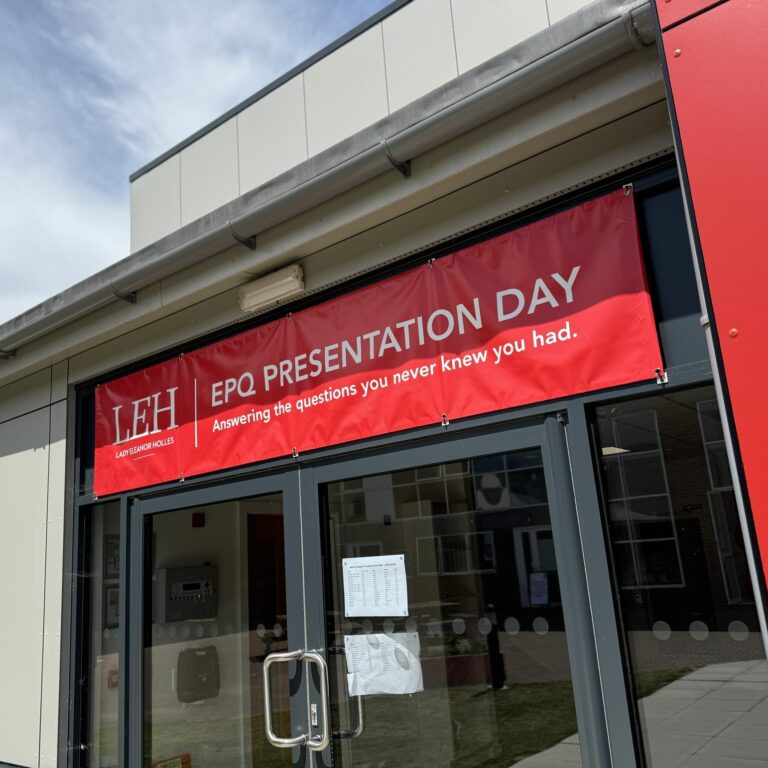
The Extended Project Qualification (EPQ) is your chance to step beyond the syllabus and take the lead on a project that’s entirely your own. Highly respected by universities – some even make lower offers to students who complete one – the EPQ is worth half an A level, with A* as the top grade.
The Extended Project Qualification

What’s involved?
You’ll explore a topic that inspires you, designing and delivering a research project from start to finish. That might mean writing a 5,000-word essay, or creating an artefact (such as a product, performance or artwork) accompanied by a 2,000-word report. Either way, you’ll also maintain a reflective log that charts your thinking, choices, challenges, and progress along the way.
This isn’t just about what you discover – it’s about how you think. You’ll sharpen your skills in:
- Independent research
- Academic writing
- Critical analysis
- Presentation and public speaking
It’s one of the best ways to show universities – and yourself – what you’re capable of when you set your sights high.

When Does It Happen?
You’ll start with a series of skills-based lessons in the Autumn Term of the Lower Sixth, covering everything from choosing a title to referencing, time management, and research techniques.
From January, you’ll begin your research and write-up, with your final submission due by the end of the Lower Sixth Year. You’ll then present your project to an audience of teachers and peers – a real showcase moment.

How Will You Be Supported?
While you won’t have formal lessons, you won’t be on your own. A dedicated supervisor will guide you, offering feedback and direction while giving you the space to own your process. This is about independence – about learning to lead, think, and write like a scholar. Choose a topic that excites you – whether it links to a future degree or simply reflects a personal passion.
Past EPQs have been impressively wide-ranging, including:
- Are the legal rulings on cases of withdrawal of life sustaining treatment in England and Wales from 1993-2023 morally just?
- To what extent is CAR-T cell therapy more effective than chemotherapy for treating haematological cancers?
- A critical exploration of the side effects and benefits of Kaftrio, a drug used to treat Cystic Fibrosis
- During World War 2, in Germany and the USA, was propaganda’s main aim to mobilise women’s war efforts, or was it to enforce a country’s ideology through its presentation of women?
- How can you optimise the use of solar power generation at home using Raspberry Pi and IoT automation technologies?
At LEH, the EPQ isn’t just an academic exercise – it’s a springboard for bold ideas, deeper learning, and confident futures.