The all-through advantage at LEH: girls school in Hampton from age 7 to 18

Lady Eleanor Holles School (LEH) is an all-through independent girls’ school in Hampton, south-west London, educating girls from age 7 to 18 on a single 24-acre campus. Girls who join the Junior School at Year 3 (age 7) progress to the Senior School without sitting an 11-plus examination.

Entry to the Junior School at Year 3 is academically selective. The process involves a mathematics and English assessment in a relaxed classroom environment, followed by a second stage for successful candidates: a group activity problem-solving morning that gives the school a broader picture of how a girl thinks and engages.

The Junior School is based at Burlington House on the northern side of the LEH campus, just across the bridge from the Senior School on Hanworth Road. Both schools share the same 24-acre grounds, the same values, and a community that connects girls from the early years of primary school through to A levels and beyond.

Explore the all-through journey at LEH: how girls gain confidence and skills from age 7, experience a seamless transition into Senior School, and enjoy the lasting benefits of a supportive and inspiring school community. Families can book an open event to experience the school first-hand.

What does all-through mean at LEH?

At LEH, all-through means that a girl can join the school at age 7 and remain on the same campus until she completes her A levels at 18, with no competitive external examination required to move from Junior to Senior School.

Our Junior School (Burlington House, 177 Uxbridge Road, Hampton TW12 1BD) and  Senior School (Hanworth Road, Hampton TW12 3HF) are situated on the same campus and physically connected by a bridge across the shared grounds. Junior School pupils use Senior School facilities – including science labs, the dance and gymnastics studio, the swimming pool and the theatre – from their early years. They encounter Senior School staff through co-curricular clubs and cross-school events. By the time they formally join Year 7, the Senior School is already familiar and a natural next step for pupils.

This matters because it transforms the experience pupils have in their last years of primary education. Instead of preparing for high-stakes entrance examinations in Years 5 and 6, LEH Junior School girls spend those years developing intellectually, socially and personally, in a curriculum designed to build genuine and life-long capability rather than exam technique and preparation.

Because Junior girls are not spending Years 5 and 6 preparing for 11-plus examinations, they have genuine space to pursue programmes that go above and beyond the curriculum – such as the iPQ and the Curious 6 – building skills and intellectual curiosity that serve them throughout their time at LEH and the years that follow.

No 11-plus for Junior School girls – how does progression work?

Junior School girls at LEH do not sit an 11-plus examination to move into the Senior School. This is a formal part of LEH’s admissions model, not an informal arrangement.

Instead, the school gets to know and understand every child. Dedicated teachers monitor every pupil’s progress, attainment and wellbeing throughout the Junior years. Teachers, pastoral leads and the Head of Junior School track each girl’s development across academic, social and emotional dimensions. The aim is to ensure every girl enters Year 7 with the knowledge, skills, independence and confidence to thrive – because the school has known her for four years and prepared her thoroughly.

It is worth noting that a small number of Junior School girls each year do choose to be considered for academic scholarships at LEH Senior School. These girls sit the 11-plus in Year 6; the school supports them to prepare for the scholarship interview, though it does not direct Junior School teaching towards the test itself. This is entirely optional and does not affect the experience of the majority of Junior girls, who progress to the Senior School through the school’s own continuous assessment of their development.

A small number of Junior School girls each year choose to leave for other schools – typically to follow a sibling, due to relocation, or to attend a selective state senior school. Around 90 per cent progress to LEH Senior School.

What the Junior School years look like

LEH Junior School offers two forms of 24 girls per year group, from Year 3 (age 7) to Year 6 (age 11). The school is academically selective, broadly Christian in foundation and open to girls of all faiths and none.

The curriculum is broad and built around genuine intellectual stretch alongside strong personal development. Girls are taught by subject specialists in science, computing, modern languages, PE, music, drama and art from Year 3.

The Junior School curriculum includes:

  • Core subjects: English, mathematics and science
  • Humanities: history, geography, philosophy and religious studies
  • Languages: French from Year 3, Spanish in Year 6
  • Creative arts: weekly music, drama and art lessons
  • Wellbeing and life skills: PSHE, mindfulness and BOUNCE lessons in emotional resilience
  • Physical education: a wide range of sports including swimming, netball, gymnastics, tennis, football and athletics
  • iPQ (Year 5): the Independent Project Qualification, an ISEB-accredited programme that develops independent research and critical thinking skills ahead of Senior School
  • Curious 6 (Year 6): a six-part series of half-termly enrichment topics including Latin, careers and the world of work, government and the legal system, STEM investigations, global citizenship and life skills

Enrichment, sport and co-curricular activity

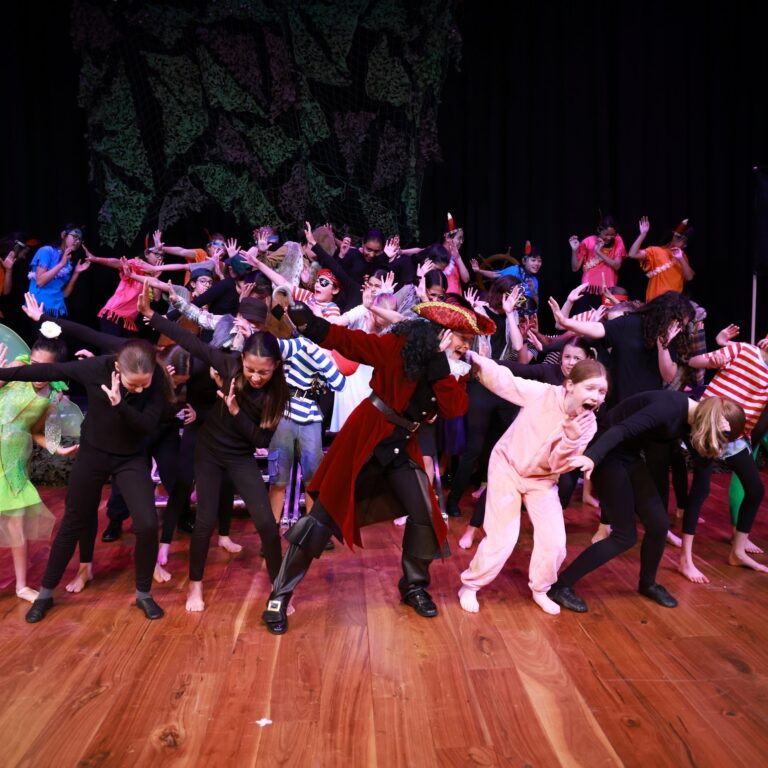
Enrichment is woven throughout school life at LEH Junior School rather than treated as an add-on. The school offers over 80 extra-curricular clubs every week. All pupils attend at least one, and 63 per cent attend more than five each week. Clubs include Spanish, mindfulness, ecology, gymnastics and art, alongside a full programme of sport and performance opportunities.

In sport, 100 per cent of Junior School pupils have participated in sports fixtures this year. The school runs 21 weekly sports clubs, with 84 per cent of girls attending at least one.

Girls are encouraged to take on real leadership roles from Year 3: Eco Squad members, Digital Leaders, School Council representatives and House Captains. Every girl is also paired with a Year 6 Big Sister when she joins, building relationships and a sense of belonging from the very first day.

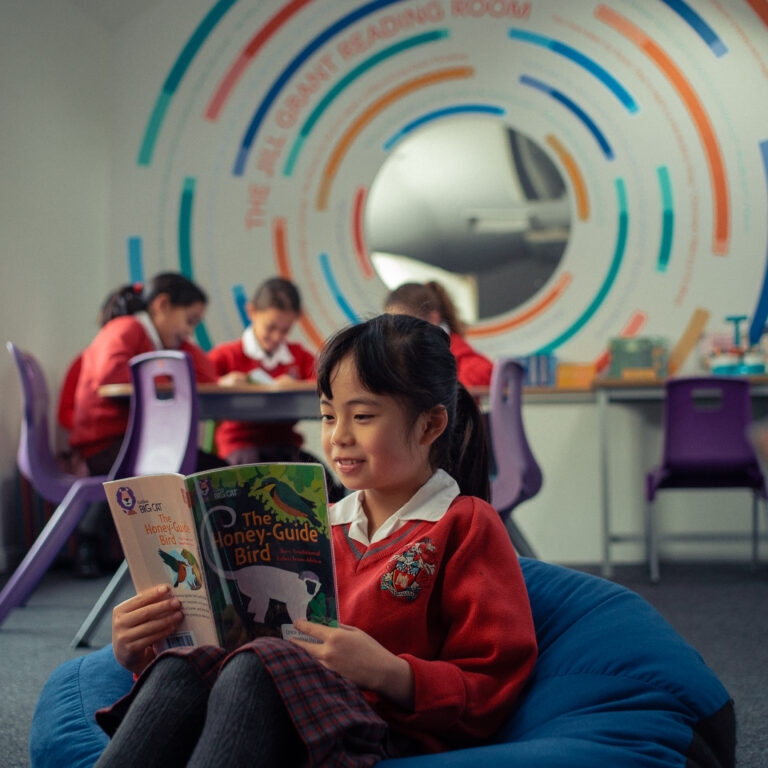
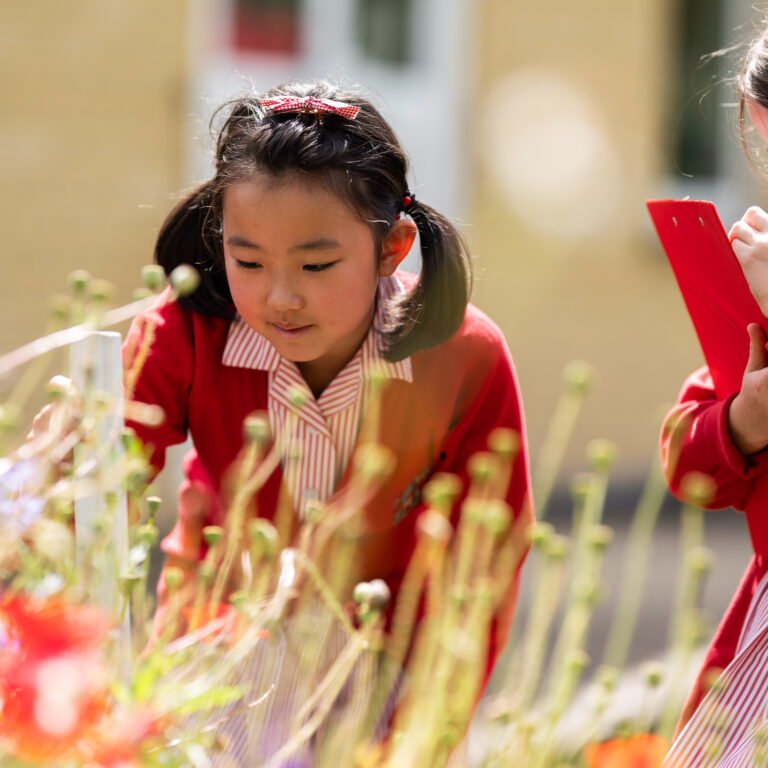
The campus gives Junior girls genuine freedom to learn outdoors. The LEH site includes a nature garden, a pond, a reading hut and teepee, and an outdoor adventure playground. Reading enrichment – through Passports, competitions, debating, research and the outdoor reading spaces – has delivered strong outcomes, with standardised reading scores improving 4.45 per cent this year.

Pastoral care in the Junior School

LEH Junior School’s pastoral model is structured, evidence-led and embedded in every day, not confined to designated pastoral sessions.

The school’s wellbeing strategy  focuses on developing intellectual curiosity, life skills and resilience to empower pupils in all aspects of their lives. A recent research project on perfectionism with Year 6 pupils identified challenges faced by high-achieving girls and provided strategies to help them and their parents reframe barriers to success. The research continues into Years 7 and 8 to ensure long-term support, and findings have already led to tangible changes: a parent engagement forum on smartphones and social media, a smartphone ban in the Junior School, and a renewed focus on ensuring screen time is purposeful and aligned with learning goals.

The school takes a holistic and proactive approach to mental health, built on four key pillars: understanding, kindness (to self and others), inclusion and resilience. This approach helps the school identify and act on early worries before they become more challenging for pupils.

The 2025 ISI inspection report noted that behaviour across the school is positive, productive and relaxed, and that there is a palpable sense of belonging and community.

The Junior School wellbeing programme includes:

  • Monday morning wellbeing check-ins for every girl, with concerns followed up discreetly by form tutors and pastoral leads
  • Weekly BOUNCE lessons in emotional resilience, developed in partnership with leading psychologists
  • Wellbeing Wednesday sessions for reflection, discussion and creative expression
  • Mindfulness courses for older pupils (Years 5 and 6)
  • Paint and Chat sessions: a relaxed, informal space to talk and connect
  • An annual Wellbeing Day with off-timetable activities including clay modelling, mindful colouring and visits from therapy animals
  • Celebration and awareness events to mark Children’s Mental Health Week and Global Play Day

The school’s wellbeing data reflects this commitment. In the most recent data, 94 per cent of pupils say they enjoy learning.Self-esteem is also high, with 86 per cent reporting they always have many things to be proud of.

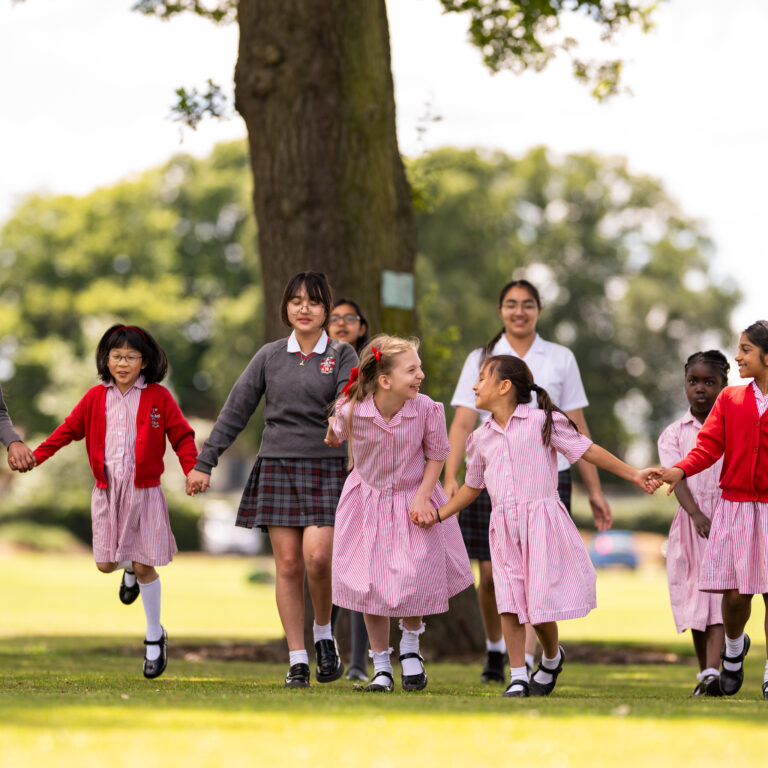
Every Year 3 girl (Form 1) is paired with a Year 6 girl (Upper 2) as a Big Sister. The Big Sister reads with her, joins her for lunch and plays with her at break times – helping every new pupil settle quickly and build friendships beyond her own class.

Additional support is provided by a school nurse and a specialist mental health coach. The school is a proud Green Flag Eco School, with pupils leading real sustainability projects from energy-saving initiatives to biodiversity drives.

How the transition from Junior to Senior School works

The move from LEH Junior School to LEH Senior School is a natural, supported transition, not a competitive selection event. Because both schools share the same campus, girls are familiar with the Senior School environment long before Year 7 begins.

The transition programme includes:

  • A dedicated Year 6 PSHE and wellbeing programme covering independence, time management, digital responsibility and friendships, delivered in the final year of Junior School
  • Expert-led parent sessions on supporting daughters through the move
  • Moving Up Day: a fun, introductory visit to the Senior School for all new Year 7 pupils, including those joining from other schools
  • September induction: the entire Year 7 group – both Junior School girls and external joiners – arrive together ahead of the rest of the Senior School, giving everyone time to settle in as a new year group
  • An autumn term residential: a team-building trip to strengthen new friendships and build confidence in the Senior School 

Junior girls also take part in cross-school activities throughout their Junior years, including drama collaborations, creative writing clubs, singing sessions and discos with older girls. These build relationships and a sense of belonging in the school they are growing towards.

The LEH journey from age 7 to 18

One school. One campus. Eleven years of continuous, connected education.

Year group Age What happens
Year 3

(Form 1)

Age 7-8 Girls join the Junior School at Burlington House. Two forms of 24 pupils. Broad curriculum including French, science, music, drama and sport from day one. Every new girl is paired with a Year 6 Big Sister and joins their House team, with inter-house competitions and Sports Fixtures with other schools throughout the year. Over 80 extra-curricular clubs available from half term onwards..
Year 4

(Upper 1)

Age 8-9 Leadership and responsibility opportunities continue with pupils taking more leadership in roles such as Eco Squad, Digital Leaders and School Council. BOUNCE wellbeing programme continues. Year 4 performing arts production week in which all pupils take part, along with the annual Arts Festival open all year groups.
Year 5

(Lower 2)

Age 9-10 iPQ research project (Independent Project Qualification, ISEB): pupils choose and investigate their own research question, developing independent thinking and academic skills. Recent Year 5 project titles include: Which place is better at conservation, Costa Rica or Florida? Why do the Japanese eat lots of fish? Are vegan sweets actually healthy? Lower 2 Senior Day: Year 5 pupils spend a full day at the Senior School experiencing lessons with Senior teachers in Senior classrooms, giving a real feel for what lies ahead. Parent events are also held at this stage. A residential trip encourages pupils to try new activities and build independence.
Year 6

(Upper 2)

Age 10-11 Curious 6 enrichment programme: six half-termly topics including Latin, STEM investigations and global citizenship. Dedicated transition PSHE programme. Moving Up Day and Senior School activities. Workshops to maintain academic confidence during the transition period. Girls who wish to be considered for academic scholarships at LEH Senior School sit the 11-plus at this stage; the school supports them to prepare for the scholarship interview but does not direct Junior School teaching towards the test itself.
Year 7

(Thirds)

Age 11 The entire Year 7 cohort – Junior School girls and external joiners – arrives together ahead of the rest of the Senior School, beginning the year group as one community. Autumn residential builds new friendships. A programme of enrichment courses begin focusing on topics such as oracy and communications skills and digital and ai awareness and ethics.
Years 8-11

(Lower 4 to Upper 5)

Age 12-16 Full Senior School experience on the 24-acre campus. Increased extra-curricular opportunities, plus collaboration with Hampton School. GCSE years. Over 100 co-curricular activities including five choirs and 20 musical ensembles, alongside a range of sporting opportunities for every year group.
Sixth Form

(Lower 6 & Upper 6)

Age 16-18 Dedicated Sixth Form Centre. A level and EPQ provision. University guidance, including Oxbridge and US universities. Alumnae network and mentoring. Bold Futures reaches its full breadth. Leadership across the whole school community – role models for all.

Frequently asked questions about all-through provision at LEH

Does LEH Junior School have to sit the 11-plus to move to the Senior School?

No. Girls who join LEH at Year 3 (age 7) do not sit an external 11-plus examination to progress to LEH Senior School. Instead, the school continuously monitors each pupil’s progress, attainment and wellbeing throughout the Junior years. The transition to Year 7 is well thought out and supported, with the girls experiencing a seamless transition, and not dependent on a competitive entrance process. Data shows that the academic profile of LEH Junior School pupils compared with that of external joiners is consistently strong.

Are LEH Junior School and LEH Senior School on the same site?

Yes. LEH Junior School (Burlington House, 177 Uxbridge Road, Hampton) and LEH Senior School (Hanworth Road, Hampton) are on the same 24-acre campus, connected by a bridge. Junior girls share facilities including the swimming pool, the theatre and the dance and gymnastics studio with the Senior School throughout their Junior years.

What age do girls join LEH Junior School?

Girls join LEH Junior School at Year 3, which is age 7. Entry is academically selective and takes place through English and mathematics assessments in a relaxed classroom setting, with some candidates invited to an observed problem-solving activity. There are two forms per year group of 24 pupils each.

What is the iPQ at LEH?

The iPQ (Independent Project Qualification) is an ISEB-accredited programme that LEH Junior School pupils undertake in Year 5. It asks each girl to choose a question that genuinely interests her and investigate it independently over a sustained period. The programme is designed to build the research, critical thinking and independent learning skills that will serve girls throughout their Senior School years. Recent Year 5 project titles have included: Which place is better at conservation, Costa Rica or Florida? Did Viking culture influence how they travelled the world? Why do the Japanese eat lots of fish? Are vegan sweets actually healthy? The iPQ sits alongside – not instead of – the curriculum, and is one of the programmes that Junior girls can pursue precisely because they are not spending Year 5 preparing for external 11-plus examinations.

What is the Curious 6 programme at LEH?

The Curious 6 is a Year 6 enrichment programme exclusive to LEH Junior School. It runs as a six-part series of half-termly topics designed to go beyond the core curriculum and develop broader thinking and life skills. Current topics include Latin, careers and the world of work, government and the legal system, STEM investigations, global citizenship and life skills. The programme is led by a dedicated team of teachers.

What percentage of LEH Junior School girls go on to LEH Senior School?

Approximately 90 per cent of LEH Junior School girls progress to LEH Senior School. A small number each year choose to move to other selective state schools or leave due to relocation or family circumstances.

How does LEH Junior School support girls' wellbeing?

LEH Junior School has a structured wellbeing programme that includes Monday morning check-ins with every girl, weekly BOUNCE lessons in emotional resilience (developed with leading psychologists), Wellbeing Wednesday sessions, mindfulness courses for older pupils, and an annual Wellbeing Day. Girls are also supported by a school nurse and specially trained staff. The 2025 ISI inspection described behaviour as positive, productive and relaxed, with a palpable sense of belonging and community.

Joining LEH at Year 3: what families need to know

Entry to LEH Junior School is at Year 3 (age 7) each September. The school is academically selective and assessment involves English and mathematics activities in an informal classroom setting. Following this, some candidates are invited to the next stage, which is an observed problem-solving session to give the school a broader picture of how a girl thinks and engages.

LEH looks for academic potential and curiosity, not evidence of prior tutoring or preparation. Girls come from a wide variety of primary schools and pre-preps and from all different backgrounds.

There are 48 Year 3 places available each year. LEH does not disclose the number of applications, as this changes from year to year, however,he school is oversubscribed, with more applications than available places.

See LEH for yourself

The best way to understand the all-through advantage is to visit the campus and meet the Junior School community. Open mornings, taster days and individual visits are available throughout the year.